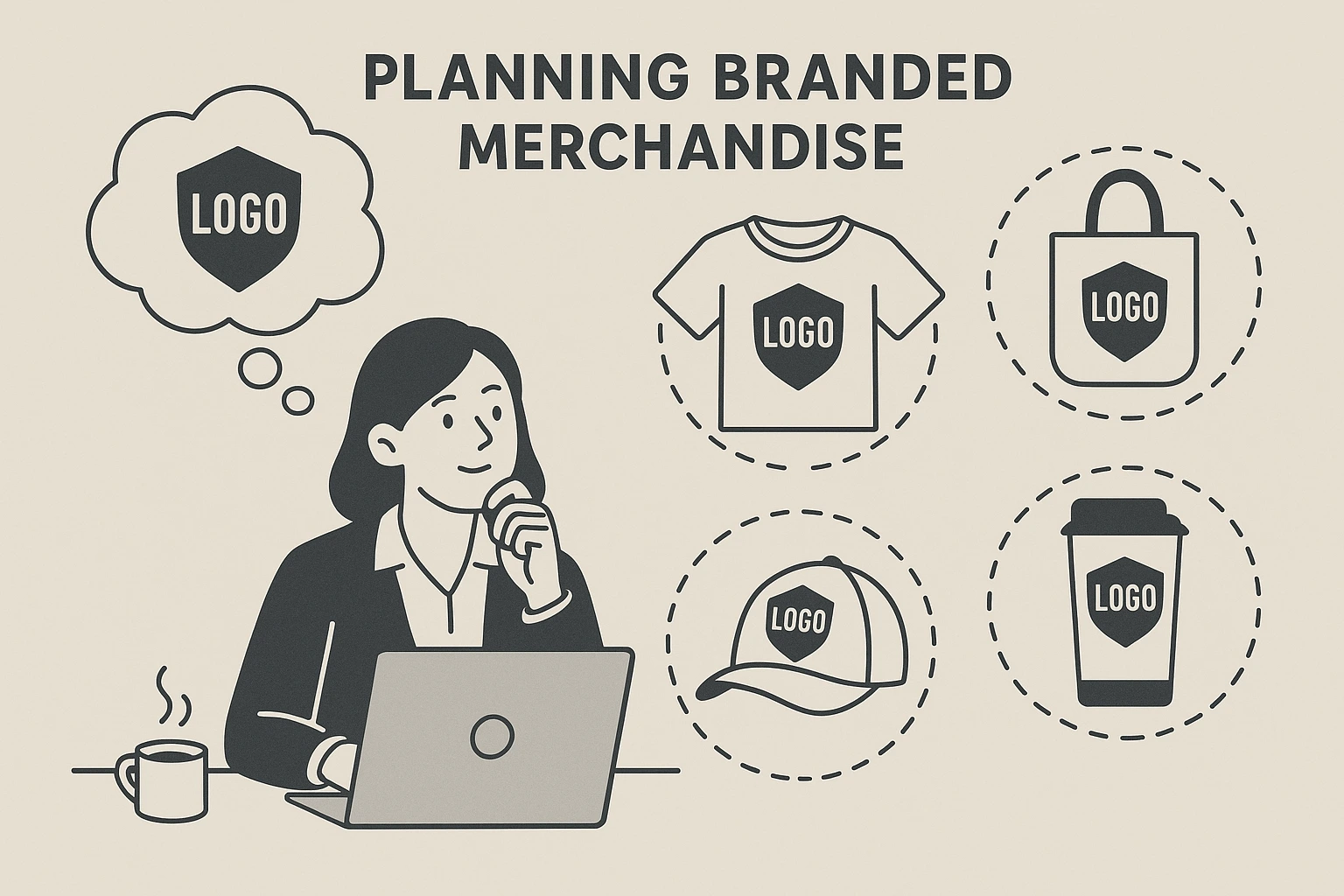
A successful branded merchandise campaign doesn’t begin with choosing products. It starts with a clear plan that aligns merchandise with brand goals, audience needs, and long-term visibility. When planned strategically, branded items become everyday touchpoints rather than one-off giveaways.
Drawing on experience in the UK promotional gift marketplace, this guide outlines how to plan an effective branded merchandise campaign step by step.
Step 1: Define the Purpose of Your Merchandise Campaign
Every merchandise campaign should have a clear objective.
Common goals include:
· Increasing brand awareness
· Supporting events or exhibitions
· Enhancing employee onboarding
· Strengthening internal culture
· Supporting client or partner engagement
Whether you are planning corporate merchandise for staff or promotional merchandise for external audiences, the purpose will shape every decision that follows.
Step 2: Understand Your Target Audience
The most effective merchandise fits naturally into the recipient’s daily life.
Consider:
· Who will receive the merchandise (employees, clients, event attendees)?
· Where will it be used (office, travel, home, events)?
· What type of merchandise would they genuinely keep and use?
Audience insight ensures the products selected feel relevant rather than generic.
Step 3: Select Practical, High-Use Merchandise
Practicality is one of the strongest drivers of merchandise success.
Items that tend to perform well include:
· Reusable drinkware such as branded water bottles
· Everyday stationery like branded notebooks
· Carry items such as a branded tote bag or printed tote bags
· Small everyday carry items like a personalised trolley coin
These products integrate easily into daily routines, ensuring repeated brand exposure over time.
Step 4: Keep Branding Subtle and Consistent
Modern merchandise branding favours subtlety.
Best practices include:
· Minimal logo placement
· Consistent colours and typography
· Clean, uncluttered designs
· Products that look professional rather than promotional
Well-designed branded merchandise feels like a useful accessory, not an advertisement.
Step 5: Consider Sustainability From the Start
Sustainability is increasingly important in corporate purchasing decisions.
When planning your merchandise campaign, think about:
· Reusable or long-lasting products
· Material choices
· Reduced or minimal packaging
Sustainable promotional merchandise not only supports environmental responsibility but also aligns with modern brand values.
Step 6: Plan Quantity, Budget and Distribution
Logistics play a key role in campaign effectiveness.
Ask:
· How many items are required?
· Is this a one-off campaign or an ongoing programme?
· Will merchandise be distributed at events, shipped directly, or included in welcome packs?
Often, fewer high-quality corporate merchandise items deliver more impact than large volumes of low-value products.
Step 7: Integrate Merchandise Into Wider Brand Activity
Merchandise works best when it supports a broader initiative.
It can be integrated into:
· Events and exhibitions
· Employee onboarding packs
· Client appreciation programmes
· Community or awareness campaigns
This ensures your merchandise supports brand messaging rather than standing alone.
Step 8: Measure Success Over Time
The success of a merchandise campaign is not measured by how quickly items are distributed.
Instead, consider:
· How long items are used
· Where they appear (office desks, travel, meetings)
· Informal feedback from recipients
Long-term use is a strong indicator of effective merchandise planning.
Step 9: Review and Refine Future Campaigns
Each campaign provides valuable insight.
After completion:
· Identify which items performed best
· Review feedback on quality and usability
· Refine product selection and design for future campaigns
This ongoing improvement strengthens future branded merchandise strategies.
Final Thoughts
Planning a branded merchandise campaign requires more than selecting popular products. By focusing on purpose, audience, practicality and thoughtful design, UK businesses can turn merchandise into a lasting brand asset.
Published by Nicholas Lane, Sales Director

Tel: 0330 1139774
Email: nicholas@merchandisebranding.co.uk
www.linkedin.com/in/nicholasjlane
Bio: Nicholas is passionate about sustainable products. In an industry that is in the process of refocussing itself on more eco orientated products, Nicholas is driving the business in this direction, always looking at different innovated products. He has a diverse range of experience within companies internationally, which includes the telecoms, manufacturing and the renewable energy sector.