Putting together an effective promotional product strategy is essential for businesses looking to enhance brand visibility, foster customer loyalty and drive engagement. This comprehensive guide explores proven strategies for selecting and utilising promotional products, offering actionable insights into planning, launching and optimising your campaigns. Whether you’re a marketing professional or a business owner, you’ll discover practical tips for leveraging branded merchandise to support your objectives, maximise ROI and stand out in a competitive marketplace.
Key Highlights
-
Align promotional product strategies with overall marketing goals for stronger brand visibility and impact.
-
Select products that resonate with your audience to maximise engagement and campaign effectiveness.
-
Integrate promotional activities across media channels for cohesive messaging and budget efficiency.
-
Leverage innovative tactics, checklists, and regular measurement to optimise promotional campaign results.
-
Monitor KPIs and customer feedback to evolve promotions for sustained business growth and relevance.
Building a Promotional Product Strategy
Developing a robust promotional strategy is essential for any business seeking lasting growth and brand impact. This comprehensive guide explores the most effective strategies to help you align your promotional product approach with your business and marketing objectives. By examining practical steps, vital promotional activities, and proven approaches to product promotion, businesses can confidently structure their next product launch or sales promotion for success. Understanding how to tailor promotional efforts to your target audience and connect these with a broader marketing strategy will turn every promotional product initiative into a strategic advantage, ensuring meaningful results in your competitive landscape.
Key Steps for Developing an Effective Promotion Approach for Your Business
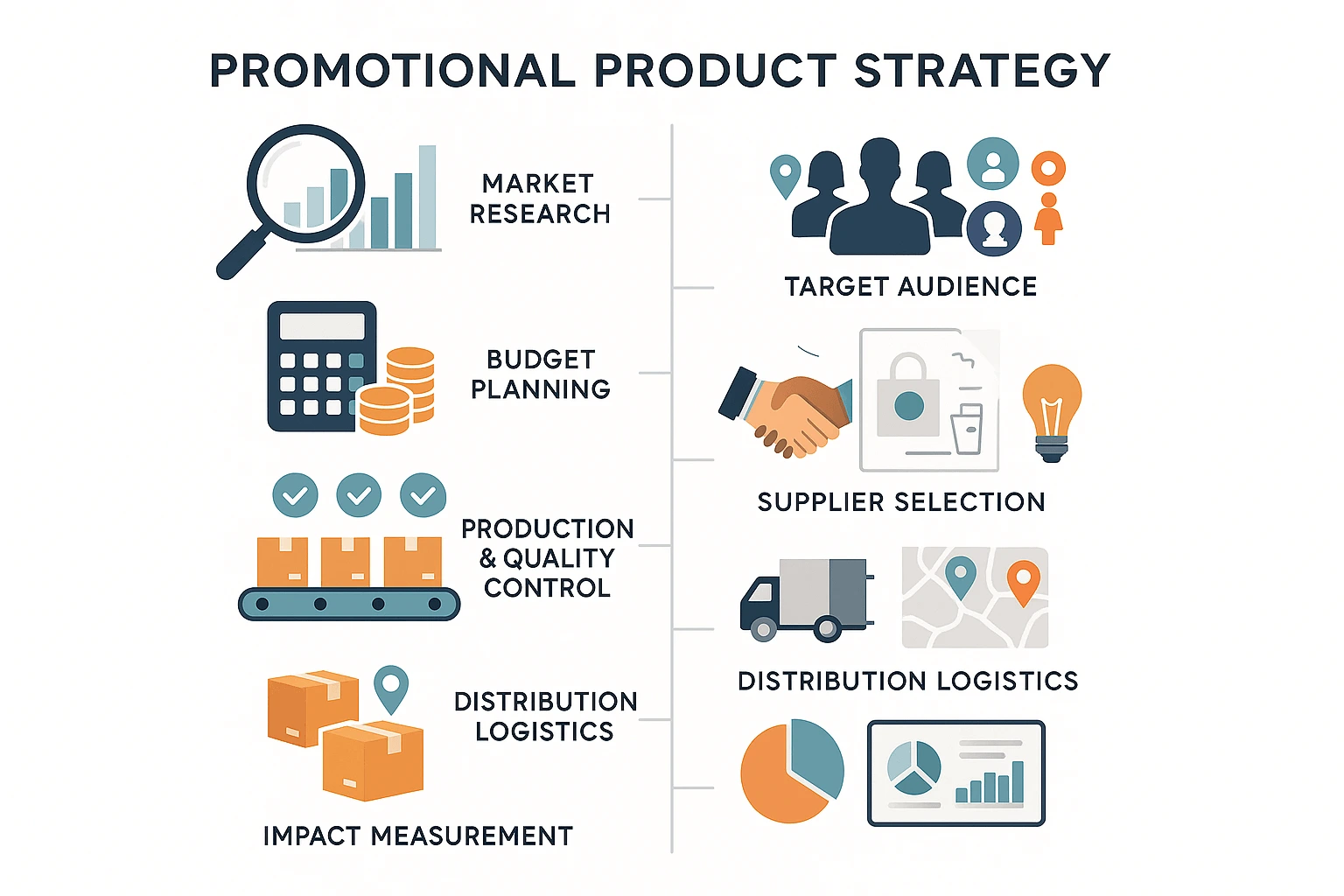
Building an effective promotional strategy starts with a strong understanding of your business goals and marketing objectives. First, clearly define what you hope to achieve, whether it's increased brand awareness, a successful product launch, or driving a specific sales promotion. Consider the needs of your target audience so you can choose products and promotional activities that truly resonate. Next, align your promotional product selection with overall marketing strategies to ensure a consistent message across every platform. Don't forget to integrate data-driven insights into your planning; by tracking and analysing the effectiveness of each promotional activity. Crafting compelling messaging around each product and tailoring the promotional activity to your business's unique strengths sets you apart. Lastly, always encourage engagement: invite your audience to participate, share, or provide feedback, making your brand's promotional approach both interactive and memorable. For ultimate effectiveness, remember to periodically review and refine your strategy, ensuring your promotional efforts stay relevant to your target audience and business needs. With every strategic move, big or small, you fortify your position in the market and unlock new growth opportunities for your business.
Aligning Promotional Marketing with Overall Marketing Strategy
To maximise the effectiveness of promotional marketing, it’s crucial to integrate every use of a promotional product with your brand’s overall marketing strategy. Cohesion between promotional goals and broader business objectives leads to more successful campaigns and stronger brand awareness. By weaving promotional methods, advertising initiatives, and tailored products into your marketing mix, you create a seamless customer experience that amplifies your messaging. This alignment empowers your business to leverage multiple channels, whether working directly with a retailer, across digital media, or in traditional advertising, to consistently position your products and brand. Strategic integration brings synergy, making each promotional investment work harder and deliver measurable, sustainable results for your company.
Integrating Promotional Methods and Promotion Strategies for Maximum Impact
Successfully integrating promotional methods and promotion strategies begins with a clear understanding of your marketing strategy and business objectives. Not every promotional technique fits every brand, these should be thoughtfully selected to reinforce the core values and personality of your business. For example, when developing a product-focused campaign, make sure that your promotional mix, including products, advertising, and partnerships, all echo the same message and support the marketing goals. Use media channels that align with your audience’s preferences, ensuring consistency whether you engage in a targeted digital push or leverage traditional outlets. Integrated approaches help build brand recognition and trust, making your marketing investments more effective.
Consider how each element of your promotional plan, be it branded products, media campaigns, or retailer collaborations, fits within the context of your overall marketing strategy. Strategic integration doesn’t just multiply your exposure; it builds a cohesive brand narrative that customers will remember. The result is more impactful advertising, higher engagement rates, and better use of your promotional budget. As you refine these strategies, regularly assess performance to ensure every product and promotion contributes meaningfully to your business growth and keeps your brand ahead in a crowded marketplace.
Selecting the Right Products and Crafting a Winning Promotional Strategy
Choosing the best products and executing a well-crafted promotional strategy are critical for businesses looking to stand out and connect with their audience. Success hinges on a thoughtful approach to selecting promotional products that reinforce your brand, align with your marketing objectives, and reflect your overall promotional strategy. By optimising each aspect of your strategy, from product choice to cost considerations and marketing integration, you ensure every promotion supports your brand identity and business goals. Analysing pricing and promotion tactics will help you maximize impact while staying competitive.
Innovative Strategies for Building a Promotional Campaign
Launching a standout promotional campaign means looking beyond conventional approaches and embracing innovative strategies that amplify your business’s marketing and brand recognition. Forward-thinking businesses prioritise alignment between product selection, media placement, and advertising to make every promotion count. Today’s competitive environment calls for creative campaigns that resonate with target audiences, harness engaging products, and maximise your business’s reach across digital and traditional media channels. By leveraging data, testing new promotion tactics, and integrating robust execution plans, you can ensure that every campaign not only meets objectives but also drives business growth. To make this process actionable, applying practical insights, tips, and accessible resources will boost your team’s confidence during strategy development.
Practical Tips for Strategy Execution
Executing an innovative promotional campaign requires more than just novel ideas, it hinges on precision, planning, and constant optimisation. Start by gathering your marketing team and clearly defining your strategy, focusing on business objectives, product alignment and marketing goals. Use a checklists to list the campaign-building process; this will ensure you stay on track from initial brainstorming through execution and measurement. Prioritise products that reflect your brand’s core identity, then craft messaging that carries across your advertising and your promotion channels.
Measuring Success and Evolving Your Promotional Efforts
Driving results with your promotional efforts isn’t just about launching a new product or executing a strategy, it’s about consistently measuring success and evolving to meet changing business demands. Start by defining clear, trackable KPIs that reflect your promotion and marketing objectives, such as customer conversions, engagement rates, or increases in product sales. Collect feedback from customers to assess how well your products connect with your audience and align these insights with the overall business strategy. Examining real data allows you to determine which promotional tactics deliver the highest return on investment and where marketing adjustments are needed. Use reporting tools to monitor trends and swiftly respond to evolving preferences, ensuring each promotion remains relevant. Regularly reviewing performance will help your team refine its approach, adapt your products and messaging, and foster sustainable growth. Encourage your business to view each campaign as a learning opportunity, by focusing on measuring outcomes, you can confidently iterate and improve, maximising the long-term success of your promotional strategy. For the best results, loop in all stakeholders, maintain open channels for idea sharing, and invite customers to be part of your brand’s evolving story.
With a well-crafted promotional product strategy, your organisation can foster lasting brand impressions, drive customer engagement and achieve measurable business growth. By selecting products that resonate with your target audience and aligning them with broader marketing objectives, you ensure every campaign delivers value and impact.
Published by Nicholas Lane, Sales Director

Tel: 0330 1139774
Email: nicholas@merchandisebranding.co.uk
www.linkedin.com/in/nicholasjlane
Bio: Nicholas is passionate about sustainable products. In an industry that is in the process of refocussing itself on more eco orientated products, Nicholas is driving the business in this direction, always looking at different innovated products. He has a diverse range of experience within companies internationally, which includes the telecoms, manufacturing and the renewable energy sector.